TL;DR Summary
Effective SEO strategies for SaaS focus on high-intent buyer queries over vanity traffic. Growth teams have to build comparison hubs, integration libraries, pain-point feature pages connected to product setup. This approach cuts acquisition costs, captures active software buyers, and drives a steady pipeline without relying only on paid ads.
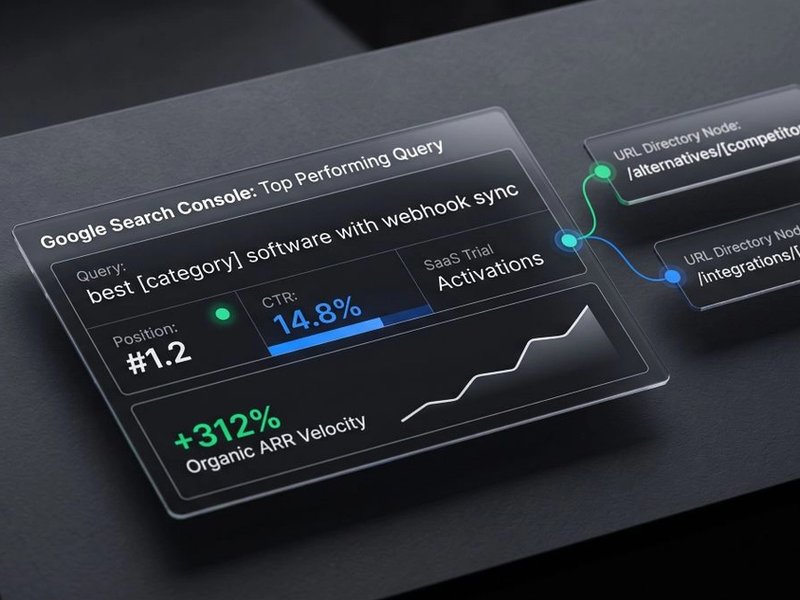
Ranking for broad definitions feels great on Google Search Console. But empty pageviews don't pay your team's bills. Not at all. Many young growth teams burn six months writing broad blog posts about generic industry trends while hoping that massive top-of-funnel traffic will somehow transform into recurring subscription revenue. Traffic climbs fast. Yet signups stay flat. Zero. Why? Mismatched intent. A reader searching for basic definitions isn't ready to buy software today. They just want quick information.
I learned this truth the hard way during my early growth tests across B2B software products. It was a costly mistake. When you shift your search plan toward high-intent terms, your revenue numbers change completely. Modern SEO strategies for SaaS require matching every page with real product evaluation, user tasks, and clear unit economics. Organic search should act like an open demo room where prospects test workflows before talking to sales, not a dry encyclopedia.
Why Do Most SaaS SEO Plans Bring Traffic Without Sales?
Most SaaS SEO plans fail to bring pipeline because they target broad educational terms instead of commercial software searches. That hurts. When marketing teams measure search progress through raw visitor volume, they write about "what is project management" instead of "project management app with sprint tracking." Visitors read the article, leave the browser tab, and never sign up for a paid trial. Zero conversions. Simple as that.
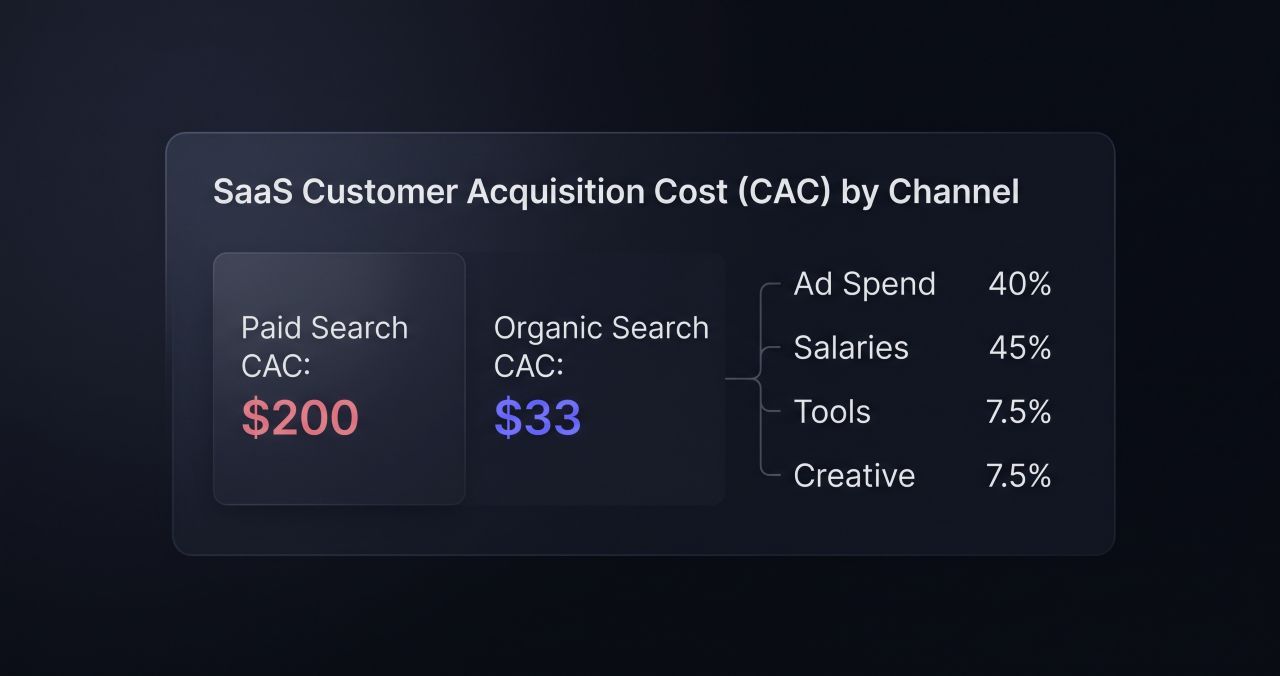
That traffic trap hurts your cash flow. In our SaaS Unit Economics breakdowns, we look closely at channel payback times and customer acquisition costs. If you spend $4,000 to write eight general posts that bring 50,000 visitors but only two trials, your real acquisition cost is terrible. It costs more than paid ads. Much more. Why? Math.
Organic Pipeline = Search Volume × Buying Intent Rate × Trial-to-Paid % × ACV
Look at the buying intent rate in that simple formula. Top-of-funnel definitions have an intent rate below 0.5%. Bottom-of-funnel comparison searches often beat 8.0%. When we run Growth Experiments & Analysis on search acquisition, pages built for buyer evaluation out-convert general articles by twelve times because active software evaluators are already comparing competing tool architectures and pricing models. That's a massive gap that changes annual recurring revenue.
How to Build a Bottom-of-Funnel SaaS Search Engine
A bottom-of-funnel SaaS search engine targets buyers who already know their problem and want to compare software tools. You build this system by creating focused landing pages for four query types: competitor alternatives, head-to-head comparisons, category list pages, and workflow pages.

Competitor Alternative Pages
Alternative searches show direct buying intent. When someone searches for alternatives to an old tool, they're unhappy with high prices, missing features, or clunky menus. They want a better option right now.
Don't write fake attack posts. Smart buyers see through biased reviews fast. Structure your alternative pages with an honest, clear breakdown:
- State who the older software fits best, like large legacy teams with full-time admins.
- Explain the exact pain points that push users away, such as rigid pricing tiers or missing webhooks.
- Show your app as the lean alternative for modern teams, with clean UI screenshots, setup steps, and direct performance comparisons.
Head-to-Head Comparison Pages
Comparison searches happen right before someone pulls out a credit card. Prospects want side-by-side feature grids, technical differences, and transparent pricing.
Build pages that compare your app to rivals. Also, build fair comparison pages between two other tools in your niche. When you offer balanced facts on adjacent software, you earn search trust and introduce your app as a helpful add-on. Buyers appreciate the honesty. It works.
Scaling Programmatic SEO with Integrations and Templates
Programmatic SEO expands your search reach by creating hundreds of structured landing pages from a single database. For software companies, the two best page types are integration hubs and ready-to-use templates.
Don't write each app connection page by hand. That takes too long. Build a structured database connecting your product with every tool your customer uses daily so that you can generate hundreds of high-converting landing pages without sacrificing page quality or user experience. The Google Search Central Guidelines (Google, 2026) state that automated pages must give real, unique value on every URL to avoid search quality filters.
/integrations/[app-name]
/templates/[use-case-name]
/tools/[free-utility-name]
Every programmatic page on your site needs five clear parts:
- Exact triggers and actions supported between both apps.
- Step-by-step setup guides with real screenshots.
- Code samples, API schemas, or webhook endpoints for technical users.
- One-click workflow templates that new users can import right away.
- Direct links to live help docs and API guides.
When we review marketing stacks in our SaaS Tools & Product Reviews, tools with rich integration libraries gain lower-cost search signups every month. It builds a moat. A big one.
Technical Foundations: Rendering and Fast Crawling
SaaS websites often run into index issues because marketing pages share code with complex web apps. Search bots hit blank client-side pages, broken links behind login screens, or slow JavaScript queues. That ruins rankings. Ouch.

Server-Side Rendering Over Client Hydration
Don't depend on client-side rendering for marketing pages. Search bots can run JavaScript, but it sits in a slow queue that delays indexation for weeks while competitors with static pages capture all the early search impressions and backlinks. Use modern web tools like Next.js to send pre-built HTML straight to crawlers.
Keep server response time under 200 milliseconds. The W3C Web Performance Standards fast load times enable search bots to crawl large sites without getting stuck. Fast pages win. Simple as that.
Subfolders Win Over Subdomains
Keep your blog, docs, and programmatic hubs on subfolders (example.com/blog) rather than subdomains (blog.example.com). Root domains share authority, backlinks, and search trust much better across simple folder paths.
| Setup Type | Crawl Speed | Shared Domain Trust | Dev Effort | Best Use |
|---|---|---|---|---|
| Subfolder (/blog) | Fast | High (Combined) | Low | Core Content Pages |
| Subdomain (blog.) | Normal | Split (Weak) | Medium | Separate Web Apps |
| Reverse Proxy | Fast | High (Combined) | High | Complex Tech Stacks |
Product-Led Content: Showing Real Software Workflows
Product-led content solves user problems by showing your app in action. Generic blog posts put a weak banner at the bottom of the page. Product-led articles weave real UI screenshots, click paths, and data reports directly into the solution.
When a reader looks for a fix to a daily task, they don't want fluff. No fluff. They want to see how to finish the job quickly. If your guide shows how your tool solves the problem in three steps, they'll sign up immediately.
We follow this system across our Content-led SEO for SaaS playbooks. Don't claim your tool does everything. Show the exact screen, the button to click, and the final output. Honest demos turn readers into happy users. It builds trust.
Financial Math: SaaS SEO Payback vs Paid Ad Spend
Growth mechanics, zero fluff.
Join 2,000+ SaaS founders getting weekly tear-downs on organic acquisition and churn reduction.
Organic search takes real work upfront. But while paid ads stop working the minute you pause your ad budget, strong organic search pages keep bringing trials for years. The economics compound over time. Steadily.
Let's look at the financial numbers for paid ads versus organic search over a full twelve-month test on a $100 monthly software plan where paid ad acquisition costs continue to climb while organic search customer acquisition costs decline as domain authority builds.
You can see these patterns in our SaaS Metrics Guide. Once an integration page ranks near the top, the extra cost for each new visitor drops to zero. That drops your blended acquisition costs and shortens your payback window. The math wins.
When Should a SaaS Team Skip SEO?
SEO isn't the right choice for every software team at every stage. Spending cash on search too early burns capital without giving fast feedback.
Pre-Product-Market Fit
If your core features change every week and you don't have paying users, skip SEO for now. Search takes four to nine months to yield results. Talk to buyers on calls, run founder sales, and test value props before building long-term search hubs. Validation comes first. Always.
True Category Creation
If you're building a brand-new tool category that nobody knows about, search volume doesn't exist yet. Zero searches. People can't search for terms they've never heard of. In category creation, focus on outbound outreach, niche communities, and social storytelling to build initial awareness.
Frequently Asked Questions
How fast do SEO strategies for SaaS show real revenue results?
Bottom of funnel comparison and alternative pages often bring qualified trials within 60 to 90 days. Your technical setup is clean. Typically, it takes six to nine months of consistent publishing and internal linking for broad educational content to rank for competitive terms.
What is the core difference between product-led SEO and standard content?
Product-led SEO creates tutorials based on real software workflows, including direct UI screenshots, setup steps, and templates. Standard content marketing focuses on broad informational articles that hide the product behind a generic sign-up button at the end of the post.
Should an early-stage SaaS team hire an agency or write internally?
Early-stage founders should write their first alternative and feature pages in-house. Inside teams know product limitations, user pain points and customer objections better than outside writers. You can hire outside help down the road to scale programmatic templates and technical fixes.
How do search engines evaluate software credibility today?
Search engines evaluate the trustworthiness of software by the amount of technical documentation, brand search queries, validated user reviews, and organic backlink trends. The Google Search Quality Guidelines placed a heavy emphasis on first-hand product experience and technical accuracy.
Building Your Organic Growth Engine
Sustainable SaaS growth is about targeting buyer intent, not chasing vanity traffic graphs. As you build out useful alternative pages, automated integration hubs, and clear workflow guides, you establish an organic channel that only gets stronger over time.Experiment freely. Check your numbers in Google Search Console, delete thin posts that never convert, and focus on pages that match real buyer needs. Test continuously.
If you're mapping out your search roadmap or testing new SaaS acquisition channels, explore our SaaS Growth Glossary to model your unit economics with clear math.